Flash Flood Cleanup in Leander, TX
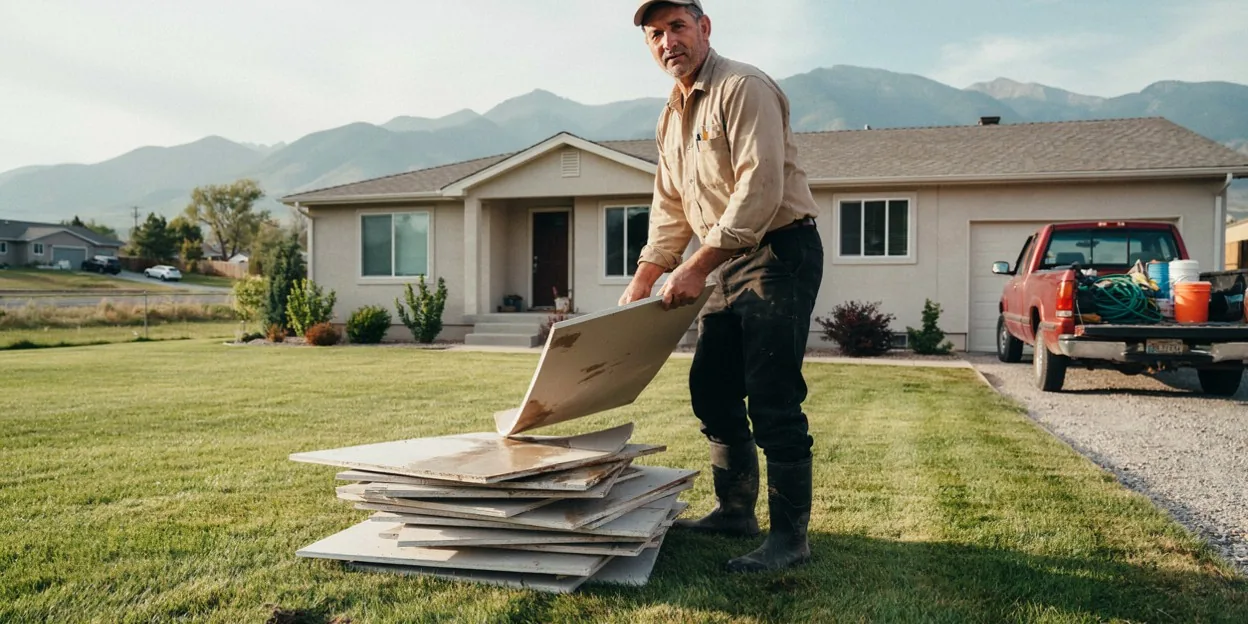
The radar showed the storm stalled over Liberty Hill at midnight, and by two the creek behind the fence that is usually dry was moving through the back yard. By dawn it was gone and there was a brown line eight inches up the garage wall, silt across the utility room, and a smell that did not belong in a house. This site routes your call to an independent local provider who cleans up flood damage in Leander and across the Hill Country side of Williamson County.
Why creek water is handled differently from a broken pipe
Water that came in from outside is not clean. It carries mud, lawn chemicals, fuel washed off the road, septic runoff from the lots upstream, and whatever the storm drains picked up. That changes the job. The crew wears protective gear, pumps out standing water, and shovels the silt. Then the porous materials the water touched come out rather than being dried: drywall below the water line, carpet and pad, particleboard cabinet bases, and boxes on the garage floor. Hard surfaces are cleaned and disinfected. Drying starts after that.
The crew seals off the wet rooms from the clean ones so silt is not tracked across the house, and logs everything that comes out. Once the contaminated material is out of the house, structural drying takes over.
The night the creek comes up
Do not drive through a low-water crossing to get home; the crossings on Nameless Road and Round Mountain Road go under with little warning. Once you are in, stay out of the water until the power to that part of the house is off. Photograph the water line and the mud before anything is moved. Keep children and pets out of the wet rooms. Do not run the air conditioner if the air handler or the ducts under the slab took water. Then make the call and lead with the fact that the water came in from outside.
The garage takes the hit; the house usually holds
On most Leander lots the slab sits a few inches above the driveway, so the loss often stops at the garage, the utility room, and the first few feet of the hall. The drywall gets cut a foot or two above the water line and the insulation behind it removed. The water heater, if it is in the garage, gets checked at the burner or the elements. The washer and dryer get checked. Tile and sealed concrete clean up. Ask the crew to photograph everything before it goes to the curb, because both a homeowners adjuster and a flood adjuster will want the record.
Sandy Creek, the San Gabriel, and a foot of rain in one night
Leander sits where the Balcones Escarpment meets the Hill Country, and storms that stall against the hills drop rain faster than the thin soil over limestone can take it. Over the July Fourth weekend of 2025 more than a foot fell in a few hours on the hills west of town. Big Sandy Creek, which drains that country toward Lake Travis along the Travis County line, rose fifteen feet in three hours. Nearly 200 homes in the Sandy Creek area were damaged or destroyed, and nine people there died. The South Fork of the San Gabriel came over its banks at Liberty Hill the same night, and FM 1431 lost its pavement in Lago Vista.
The lake itself is the other flood. In October 2018, after a week of rain on the Llano River, Lake Travis climbed 24 feet in one day and crested at 704.39 feet on October 20, and the low streets of Jonestown, Lago Vista, and Volente sat under water for days. The National Weather Service office in New Braunfels issues the flash flood warnings for Williamson and Travis counties, and the county floodplain maps show which lots along Brushy Creek and the San Gabriel are in the creek's reach.
If the water came through the roof instead, that is roof leak water damage. If a pipe inside the house caused it, water extraction is the cleaner job.
A standard Texas homeowners policy does not pay for water that rose from outside. That is a separate flood policy through the national program, and many Leander homes outside the mapped floodplain do not carry one. Ask the crew to document the water line, the silt, and every item removed either way.
Call once the water has gone down
Say how high the water got, which rooms it reached, and whether the power to that part of the house is off. Mention if the air handler or the water heater sat in it. Have your address and a callback number in front of you. Call (737) 317-2602.