Structural Drying in Leander, TX
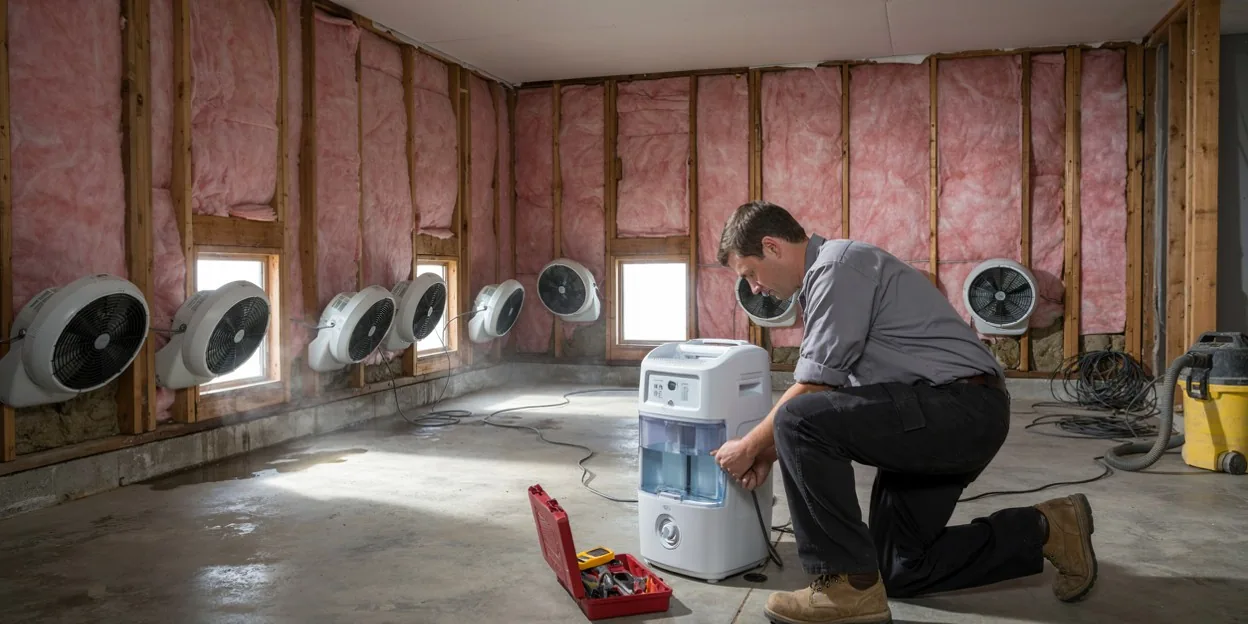
The puddle is gone. You ran box fans for three days, the tile looks normal, and the carpet upstairs feels dry to the hand. But the baseboard in the hall has a gap at the top that was not there last week, the closet smells like a wet towel, and the engineered wood in the dining room has a ridge along one seam. That is a house that was extracted and never dried. This site routes your call to an independent local provider who dries homes in Leander and across northwest Williamson County.
Air movers, dehumidifiers, and the humidity outside your window
Drying is two machines working against each other on purpose. Air movers push air across wet drywall, subfloor, and framing so the moisture leaves the material. Dehumidifiers then strip that moisture from the air before it can land on the drywall in the next room. In a Leander July the outside air is already heavy, so opening the windows makes things worse, and a box fan just moves damp air around.
The crew sets equipment by the meter readings, not by where the water was. A wall that reads wet at the base gets an air mover aimed at it and, if the cavity is wet, a hose blowing into the wall through a small hole behind the baseboard. They come back to read the meters, usually every day, and move or pull equipment as the numbers come down.
What you can do while the machines run
Leave them on. The noise is the point, and shutting them off overnight adds a day to the job. Keep interior doors open where the crew set them and closed where they closed them, because they are steering air. Keep the thermostat where they asked. Do not put the furniture back or re-lay the rugs until the last reading. If a machine trips a breaker, reset it and tell the crew where it happened.
Drywall that stays, flooring that goes
The goal is to dry in place whatever the meter says can dry. Drywall above the water line, framing, subfloor, and most cabinet boxes usually make it. Drywall that was wet at the base for more than a day is cut and the insulation removed. Laminate and engineered wood with a swollen core come out. Carpet often stays if the pad was pulled fast. Ask the crew to mark the dry target on the wall and show you the readings that get there, so the end of the job is a number and not a feeling.
Why a Leander two-story dries slower than it looks
The subdivisions that filled in from Block House Creek to Travisso were built with the plumbing upstairs and in the attic. When a leak comes from above, water sits on top of the ground-floor ceiling drywall and inside the walls below it, where a fan in the room does nothing. The crew opens the ceiling at the low point and dries the cavity from inside, and the wall cavities get the same treatment through holes behind the baseboard that the rebuild covers later.
Central Texas humidity is the other factor. From May to September the dew point here runs high enough that wet drywall left to the room air can stall at damp for weeks, which is how a leak becomes a mold call. That is why the dehumidifiers are sized larger than a dry-climate job would need. Drying usually follows water extraction on a supply-line loss or burst pipe water damage after a freeze, and the readings from those first hours set the plan.
Coverage for drying follows the coverage for the loss that caused it. A sudden failure is often covered; a slow leak often is not. This site makes no promise about your policy. The crew's daily readings and photos are what the adjuster wants to see.
Call when the room still feels damp
Say when the water came in, what has already been done, and which rooms still smell or feel wrong. Mention any flooring that has cupped or baseboards that have moved. Have the street address and a callback number at hand. Call (737) 317-2602.